

Budget Home Improvement: Three Weekend Plan for Renter Friendly Upgrades
For the biggest change on a small budget, start with paint, a lighting swap to warm 2700K bulbs, and new cabinet hardware. Each one fits into a single weekend, costs under $200, and works whether you own the place or rent it.
The rest of this guide breaks down room-by-room priorities, real cost ranges, and a simple three-weekend plan you can copy.
TL;DR:
- Painting a room, swapping cabinet hardware, and changing to warm 2700K LED bulbs offer high impact for under $200 and can be completed within a weekend.
- Recaulking, installing peel-and-stick backsplash, and replacing switch plates provide noticeable updates with minimal cost and time, often under $50.
- Major upgrades like full kitchen or bathroom remodels typically cost between $200 and $1,000, but sticking to high-impact, small improvements keeps expenses manageable.
- A realistic renovation budget should include a 15% to 20% contingency to cover unexpected issues like hidden water damage or wiring problems.
- Basic tools like screwdrivers, a level, and painter’s tape suffice for most projects, while hiring licensed professionals is necessary only for structural, electrical, or plumbing work.
Table of Contents
- The Budget Home Improvement Projects Worth Doing First
- Room-By-Room Priorities That Actually Move the Needle
- What a Realistic Budget Actually Looks Like
- Where to Save on Tools, Materials, and Products
- When to DIY and When to Call a Licensed Pro
- My Three-Weekend Plan for a Full Budget Refresh
- Shop Affordable Lighting to Start This Weekend
- Sources
- FAQ
The Budget Home Improvement Projects Worth Doing First
Not every project earns its spot on a tight budget. These twelve deliver the most visible change for the least money, and they’re ranked by how much impact you get per dollar spent.
- Paint one room. Fresh paint hides scuffs and instantly modernizes a space. A gallon of quality paint runs $30 to $50, and a full room averages around $350 including supplies when you do it yourself. Pick, prep walls, and paint. Time: one weekend. Renter tip: ask your landlord first, or stick to a peel-and-stick accent instead.
- Swap cabinet hardware. New pulls make cabinets look custom without touching the boxes. Pulls typically cost $2 to $10 each. Measure, drill if the hole spacing changed, install. Time: two to three hours. Cost band: under $50.
- Switch to warm 2700K LED bulbs. Cool white bulbs make rooms feel clinical; 2700K reads warm and inviting, and LED bulbs run $2 to $10 each. Just unscrew and replace. Time: 15 minutes. Cost band: under $50.
- Add a dimmer switch. Pairs perfectly with warm bulbs for mood control. Cost band: $20 to $40. Time: 30 minutes if you’re comfortable with basic wiring.
- Recaulk the tub or sink. Old, yellowed caulk makes a whole bathroom look neglected. New caulk costs under $10 and prevents water damage down the line. Time: one afternoon, mostly drying time.
- Install peel-and-stick backsplash. Designer look, zero demolition. Sheets run $8 to $15 each, with a small kitchen backsplash landing around $25 to $50 total. Cost band: under $50.
- Replace switch plates and outlet covers. A five-minute upgrade that removes decades of grime and mismatch. Cost band: under $20.
- Hang curtains higher and wider. Mounting rods closer to the ceiling makes rooms feel taller. Cost band: $30 to $80 depending on fabric.
- Add floating shelves. Cheap storage that doubles as decor. Cost band: $20 to $60. Time: one afternoon.
- Refresh small landscaping. Mulch, a few plants, and a solar path light near the entry cost $100 to $500 and change first impressions fast.
- Swap a dated light fixture. A new flush mount or vanity light changes a room’s whole character. Cost band: $50 to $200 depending on the fixture.
- Deep clean and declutter. Free, but it makes every other project on this list look better. Do it first.
Room-By-Room Priorities That Actually Move the Needle
Different rooms respond to different budget home improvement tactics. Here’s where to focus in each one.
Kitchen
- Swap cabinet hardware for an instant refresh, $2 to $10 per pull.
- Add peel-and-stick backsplash tile behind the stove or sink, $25 to $50 for a small area, one afternoon.
- Replace an outdated faucet with a basic new one, $50 to $150, half a day including shutoff and reconnection.
Bathroom
- Recaulk the tub and sink to instantly look newer and stop moisture problems.
- Swap the shower curtain and rod for a wider, higher-mounted version, $20 to $50, ten minutes.
- Replace a dated vanity light with a modern LED bar, $75 to $200, one to two hours if wiring is already in place.
Living room and bedroom
- Paint one accent wall instead of the whole room to save on paint and time.
- Hang curtains at ceiling height for the illusion of larger windows and taller ceilings.
- Add floating shelves for storage and styling that doesn’t eat floor space.
Entryway
- Paint the front door a bold color, $30 to $60 in paint, one weekend including dry time between coats.
- Install a row of hooks for coats and bags, under $30, 20 minutes.
- Add a few plants, fresh mulch, or a small light fixture near the door for curb appeal.
What a Realistic Budget Actually Looks Like
Budget home improvement projects tend to fall into three clean cost bands. Under $50 covers hardware swaps, bulbs, caulk, and switch plates. The $50 to $200 range covers paint for a full room, a new light fixture, or a faucet swap. Projects between $200 and $1,000 usually involve multiple upgrades stacked together, like a full kitchen refresh with hardware, backsplash, and lighting done at once.
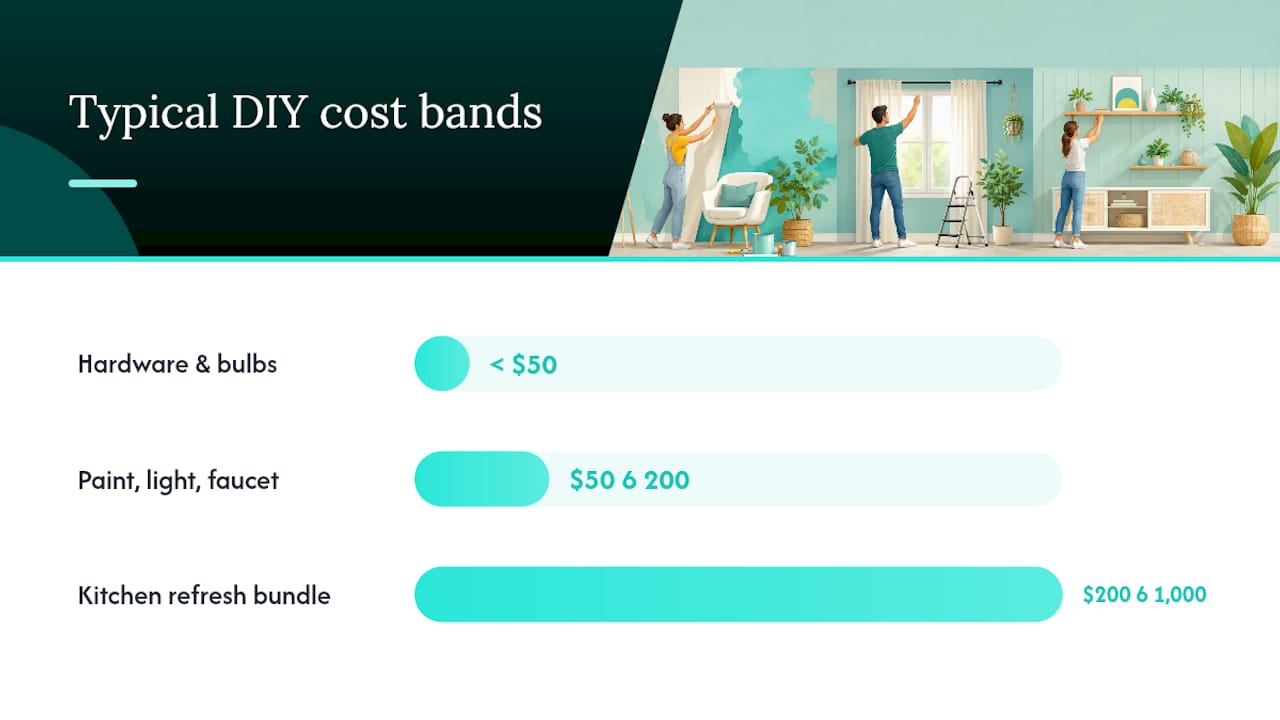
A realistic renovation budget always needs breathing room. Industry cost calculators recommend building in 15% to 20% contingency for small projects, since hidden conditions like old wiring or water damage show up more often than homeowners expect. For anything you’re paying a professional to do, get two or three written bids before committing, even for something as small as an outlet upgrade.
A one-afternoon plan might be hardware and bulbs for $60 to $100. A full weekend can cover a painted room plus new lighting for $250 to $400. A serious under-$1,000 refresh combines paint, lighting, hardware, and small landscaping across a full weekend or two. Skipping bids and ignoring hidden conditions are the two mistakes that blow past every one of these numbers.
Where to Save on Tools, Materials, and Products
You don’t need a full workshop to knock out these projects. A basic screwdriver set, a stud finder, a level, painter’s tape, a caulk gun, and safety glasses cover almost everything on this list. If you need a drill or sander for a single project, check a local tool library or hardware store rental counter instead of buying one outright.
- Buy paint and hardware during seasonal sales at big-box retailers, when discounts run deepest.
- Look for open-box lighting and fixtures, which are often fully functional at a fraction of retail cost, once inspected.
- Ask local stone fabricators about remnant slabs for small surfaces like a bathroom vanity, since a few square feet of high-end stone costs far less than a full slab.
- Choose peel-and-stick backsplash or removable wallpaper when you’re renting, so the deposit stays intact.
For lighting specifically, Horizon Endless carries halogen and LED bulb combos alongside home fixtures, all inspected before resale.
Pro Tip: Buy one extra bulb or hardware piece beyond what you need. Matching finishes months later, after a style is discontinued, costs more time and money than the $5 you’d spend now.
When to DIY and When to Call a Licensed Pro
Most of the projects above are safe weekend DIY work. Painting, hardware swaps, bulb changes, caulking, and shelf installation carry no real risk if you follow basic instructions.
- Hire a licensed pro for gas lines, major electrical panel work, or anything structural like removing a load-bearing wall.
- Get a permit and inspection whenever local code requires it, typically for new circuits, plumbing rerouting, or structural changes.
- Stop and call a professional if you find knob-and-tube wiring, active water damage, mold, or a wall that feels unstable when you tap it.
- Collect two to three written bids for any paid work, and build in that 15% to 20% contingency for surprises a contractor finds once walls are opened.
My Three-Weekend Plan for a Full Budget Refresh
Weekend one: declutter, then paint one room or the front door. Weekend two: swap light fixtures and cabinet hardware. Weekend three: add textiles, floating shelves, and final styling touches.
[brand_signal] Horizon Endless offers a wide array of quality products with significant discounts and emphasizes fast, free shipping, appealing to budget-conscious consumers. (https://horizon-endless.com)
— cody
Shop Affordable Lighting to Start This Weekend
Affordable lighting retailers offer lower prices than full-price stores; many inspect fixtures before shipping, with some providing fast and free shipping to keep your weekend project on track.

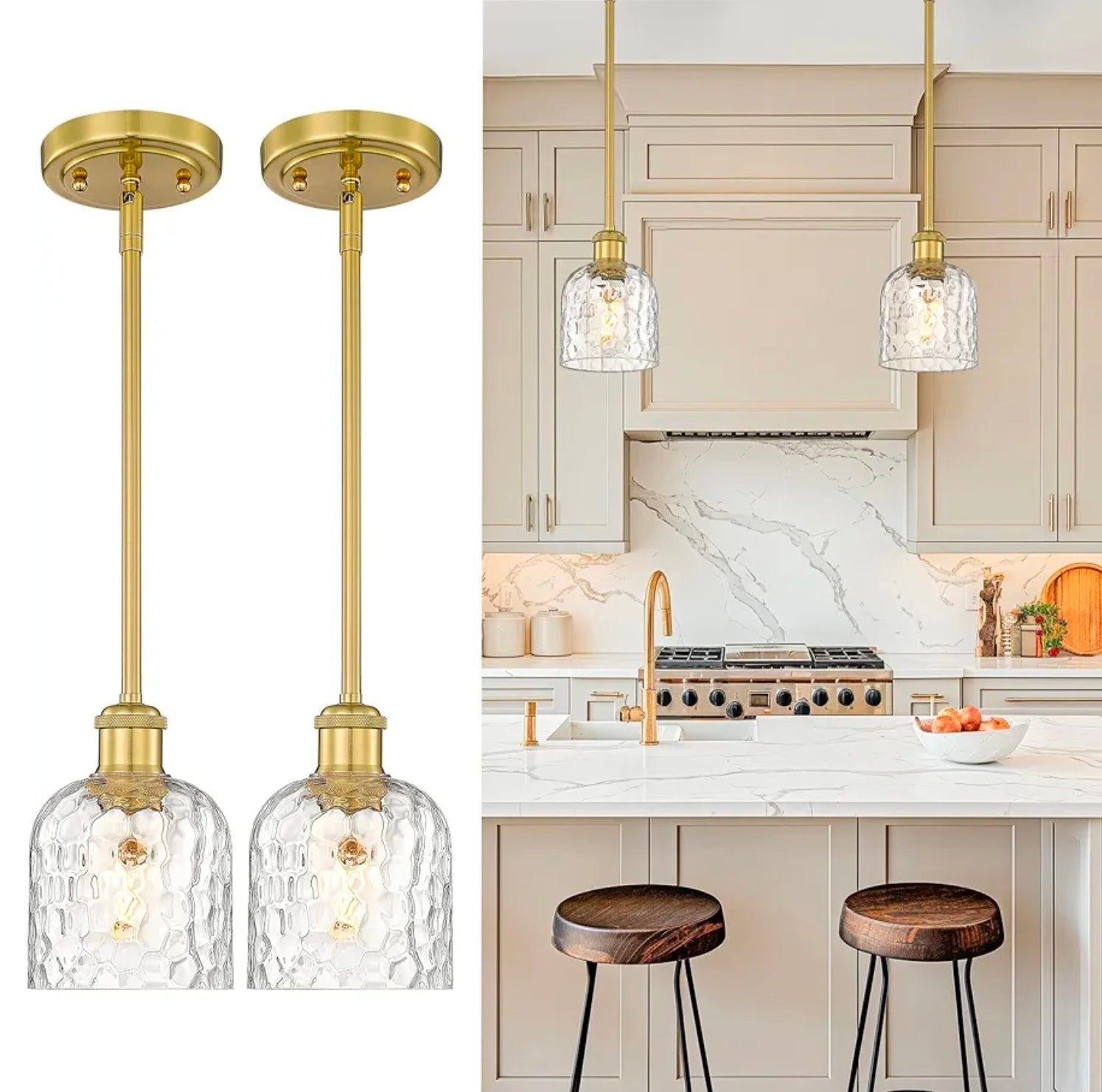
If your bathroom light is next on the list, the Sleek 48" Dimmable Black Vanity Light gives you modern LED brightness with dimming control built in. For a whole-room lighting overhaul, the 6-pack of 6-inch LED recessed lights lets you pick your color temperature, including warm 2700K, and dim to whatever mood the room calls for. Smaller spaces like a kids’ room or hallway do well with the 12-inch semi flush mount ceiling light, an easy install with real style. Every order carries a money-back guarantee, so browse the full lighting selection and get your weekend project moving.
Sources
- 10 Home Renovation Projects Under $1,000 | Redfin
- Home Improvement Cost Calculator & Project Budget Estimates | Homestery
- Cheap DIY Home Upgrades Under $50 (That Make a Huge Difference) | CozyBudgetLiving
FAQ
What Are Some Budget-Friendly Home Improvements?
Paint, cabinet hardware swaps, warm LED bulb changes, and recaulking deliver the most visible change for the least money. Most of these fall under $50 and can be finished in an afternoon, with peel-and-stick backsplash as a popular renter-friendly option.
Is $10,000 Enough for a Kitchen Remodel?
A budget in the low thousands is enough for a meaningful refresh, cabinet hardware, new fixtures, backsplash, and paint, but not a full gut renovation with new cabinets and appliances. Stretching that budget further means prioritizing high-impact swaps over structural changes.
What Is the 30% Rule for Renovations?
The 30% rule suggests keeping any single renovation project’s cost at or below 30% of your home’s current value, so you don’t overspend relative to what you’d recoup. For most budget-conscious homeowners, sticking to smaller, high-impact projects naturally keeps you well under that threshold.
What Is a Realistic Budget for a Home Renovation?
A realistic small-project budget ranges from under $50 for a single upgrade to $1,000 for a multi-project weekend refresh combining paint, lighting, and hardware. Always add 15% to 20% contingency on top of your estimate to cover hidden surprises like old wiring or water damage.


