

10–30% Savings, Shorter Deadlines: Open-Box Returns and Warranties
Yes, most open-box items can be returned, but the window is usually shorter than what you get on a brand-new purchase, and the rules depend entirely on the seller’s specific policy and whether the manufacturer’s warranty is still active. Before you buy, check two things: the retailer’s return deadline for open-box merchandise and how much warranty coverage is left on the item.
TL;DR:
- Return windows for open-box items are typically shorter than those for new products, often halving the standard period or less, depending on the retailer.
- Manufacturer warranties usually remain valid on open-box items as long as the original coverage period hasn’t expired, and buying does not reset or void the warranty.
- To evaluate an open-box purchase, immediately inspect, test, and document the item within 48 to 72 hours of receipt, especially checking serial numbers and functionality.
- Common open-box categories include electronics, home improvement, and automotive parts, mostly due to returns, cancellations, or display use rather than product defects.
- Open-box discounts generally range from 10% to 30%, making higher-priced items with active warranties and clear condition disclosures the best value.
Table of Contents
- What Does Open-Box Mean, and How Is It Different From Used or Refurbished?
- How Do Open-Box Return Windows and Retailer Policies Usually Work?
- What Warranty and Legal Protections Come With an Open-Box Item?
- How Do You Inspect, Test, and Return an Open-Box Item?
- Is an Open-Box Deal Actually Worth Buying?
- How Horizon Endless Inspects and Guarantees Every Open-Box Item
- What’s the Environmental Upside of Buying Open-Box?
- Why Do Products Become Open-Box, and What Categories Show Up Most?
- Why I’d Still Buy Open-Box, and When I Wouldn’t
- Shop Inspected Open-Box Deals at Horizon Endless
- Sources
- FAQ
What Does Open-Box Mean, and How Is It Different From Used or Refurbished?
An open-box item is one that a shopper bought and returned, or that a store unsealed for display, floor demos, or online orders that got canceled before shipping. The box has been opened, but the product inside is often unused or only briefly handled. That’s the key distinction that separates open-box from other discount categories you’ll see in listings.
Here’s how the labels typically shake out:
- Open-box: Returned or unsealed, usually inspected, often carries the full manufacturer warranty.
- Used: Owned and operated by a previous customer for an extended period, sold as-is in most cases.
- Refurbished: Repaired, tested, and often re-certified by the manufacturer or an authorized third party, sometimes with its own separate warranty.
- Overstock: Never opened at all, simply excess inventory a retailer needs to move.
According to a consumer-facing breakdown of open-box condition grades, these items typically sell at a 10% to 30% discount, depending on the retailer and how the product graded out during inspection. That range is a useful rule of thumb whether you’re shopping for a blender or a set of automotive parts, since the discount reflects both the risk to the seller and the condition of the item itself.
How Do Open-Box Return Windows and Retailer Policies Usually Work?
Open-box return windows tend to be shorter than the window on a brand-new item from the same retailer, and that gap catches a lot of shoppers off guard. A retailer might give you 30 days on a new laptop but only 15 days on the open-box version of that same model. Retail return periods commonly start counting the day you receive the product, not the day you ordered it, and open-box, refurbished, and new purchases frequently fall under separate policy tiers, as outlined in Best Buy’s published return and exchange policy.
A few conditions can shrink your return options even within that window:
- Missing accessories or parts. Cables, remotes, manuals, and mounting hardware all need to be present for a clean return.
- Visible signs of use. Scratches, scuffs, or wear that wasn’t disclosed at purchase can trigger a restocking fee or a denied return.
- Missing or mismatched serial numbers. Retailers match the serial on the box to the unit itself, so a swapped or missing tag is an automatic red flag.
- Restocking fees. Some sellers charge 10% to 20% on returned electronics, though several states limit or prohibit these fees, so check your state’s consumer protection rules before assuming one applies.
Starting a return is straightforward once you know the format. In-store purchases usually just require your receipt or order confirmation and the item in its original packaging. Shipped orders typically need a prepaid return label generated through the retailer’s account portal, plus the original box and all included accessories repacked the way they arrived.
What Warranty and Legal Protections Come With an Open-Box Item?
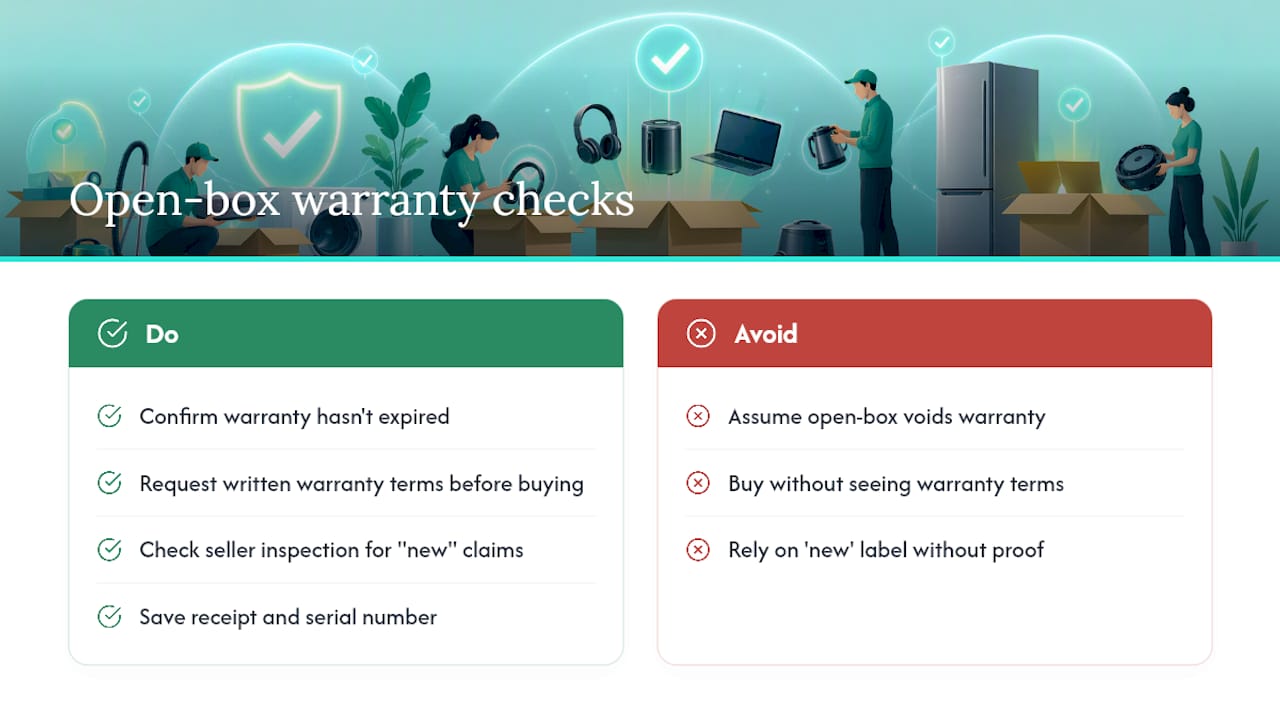
The manufacturer’s warranty almost always survives the return process, as long as the original coverage period hasn’t run out. Buying open-box doesn’t reset the warranty clock, and it doesn’t void it either, unless the listing specifically says otherwise.
Federal rules back this up. The FTC’s guidance on warranties requires that written warranty terms for any consumer product over $15 be made available to you before you buy, either at the point of sale or electronically. That means a seller can’t hide the warranty terms from you until after your money has changed hands.
FTC staff reviewed a proposal from Sony Electronics and concluded that reselling returned electronics as “new” is lawful when the seller’s inspection process reliably confirms the item was never powered on and is complete and undamaged, carrying the same warranty treatment as a first-sale unit.
That opinion, detailed in the FTC’s staff letter to Sony Electronics, is part of why so many retailers lean on rigorous inspection standards for open-box inventory. On top of that, the Magnuson-Moss Warranty Act sets federal rules for written warranties, spelling out your remedies (repair, replacement, or refund) if a covered product turns out to be defective. If something goes wrong after you get it home, your first call should be the manufacturer’s support line with your receipt and serial number ready.
How Do You Inspect, Test, and Return an Open-Box Item?
Treat the first 48 to 72 hours after delivery or pickup as your evaluation window. That’s when you have the most leverage and the clearest memory of what the listing promised.
- Unbox everything immediately. Match every accessory, cable, and manual against the listing description, and confirm the serial number matches your receipt.
- Power it on and run basic functions. Turn on the device, test the ports, check the display, and put it through whatever its core job is, whether that’s brewing coffee or charging a phone.
- Document any issue right away. Take timestamped photos and video of anything that looks off, and keep your packing slip and order confirmation email in one folder.
- Start the return the moment you find a problem. For shipped items, log into your order history and request a return label; for in-store purchases, bring the item, its packaging, and your receipt back to the counter.
Consumer guidance on open-box purchases consistently recommends documenting condition and retaining serial numbers and packing slips right away, since that evidence is what speeds up both returns and warranty claims if a dispute comes up later.
Pro Tip: Photograph the shipping box itself before you open it. If a package arrives damaged or resealed oddly, that photo can be the difference between a smooth return and a drawn-out argument with customer service.
Is an Open-Box Deal Actually Worth Buying?
Open-box shopping makes the most sense on higher-priced items where the dollar savings are real and the manufacturer warranty still has plenty of runway left. A $600 open-box appliance at 20% off saves you $120, and if it comes with a year of warranty remaining, that’s a strong trade. A $40 gadget marked down 8% isn’t worth the shorter return window or the risk of a missing part.
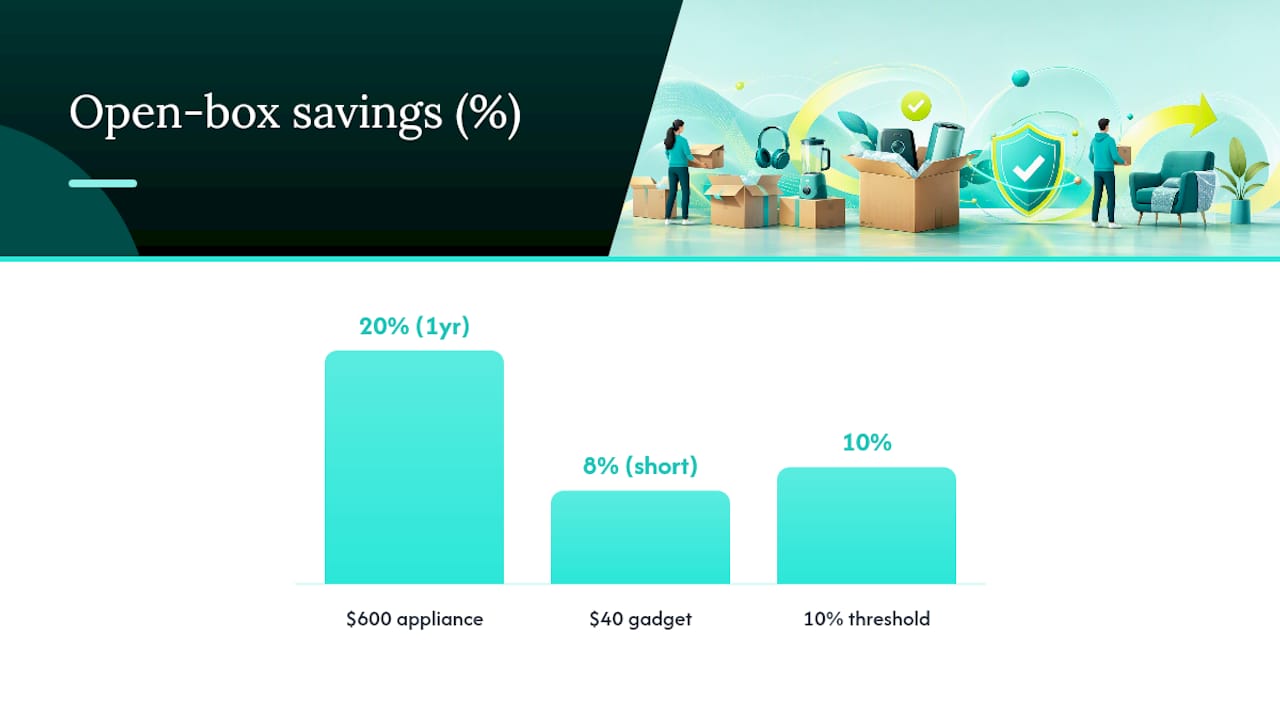
Skip the deal when the discount is thin, the listing doesn’t mention warranty status, accessories are listed as “may be missing,” or the return window is under a week. Multiple consumer guides suggest a practical threshold of roughly 10% savings as the floor worth accepting on any item where you’re giving up return flexibility.
Run through this before you check out:
- Does the listing state the discount percentage clearly?
- Is the manufacturer warranty explicitly confirmed as active?
- What’s the return window, and does it match what you’d want for this price point?
- Are all original accessories and documentation included?
- Does the seller disclose any cosmetic or functional issues upfront?
- Is there a money-back guarantee if the item doesn’t match the description?
How Horizon Endless Inspects and Guarantees Every Open-Box Item
Open-box products from discount e-commerce platforms typically go through inspection processes checking condition, fitment, and completeness to inform buyers about their product. These listings are often paired with guarantees, customer support, and shipping options such as in-store pickup, allowing buyers to inspect items before committing.
You can dig deeper into how condition grades and inspection standards work across categories like home lighting, appliances, and automotive parts. It’s the same kind of transparency you’d want from any reseller handling returned inventory, whether that’s a discount retailer or a logistics partner preparing merchandise for resale.
What’s the Environmental Upside of Buying Open-Box?
Buying open-box keeps a fully functional product out of the landfill, and that math adds up fast across an entire industry. A returned blender, lamp, or car part that still works doesn’t need new raw materials, new manufacturing energy, or a new shipping run from a factory overseas. It just needs a buyer.
Retailers that inspect and resell open-box inventory are effectively extending a product’s life cycle instead of scrapping it, which cuts down on the packaging waste, plastic, and carbon footprint tied to producing a replacement from scratch. Choosing an open-box appliance or power tool over a brand-new one is a small, practical way to reduce demand on manufacturing without giving up functionality. It’s one of the more underrated reasons open-box shopping has grown from a clearance-aisle afterthought into a legitimate category of its own.
Why Do Products Become Open-Box, and What Categories Show Up Most?
Products end up in the open-box bin for reasons that have nothing to do with the item being broken. A customer orders the wrong size, changes their mind after unboxing, or returns a gift that didn’t fit their needs. Retailers also unseal units for in-store display, use them as floor models, or receive online orders that got canceled after the box was already opened for a shipping check. None of that means the product inside is damaged.
Certain categories show up in open-box listings more often than others simply because of how frequently people buy and return them. Consumer electronics top the list, from laptops and headphones to smart-home gadgets, since buyer’s remorse and compatibility issues run high in that category. Home improvement items like lighting fixtures, a canless downlight such as the DGF4(v3) Canless Downlight in oil-rubbed bronze, and small appliances also turn up regularly, often because a contractor over-ordered or a homeowner changed their design plan mid-project. Automotive and Powersports parts, tools, and seasonal decor round out the common categories, usually tied to sizing mismatches or project cancellations rather than defects.
Why I’d Still Buy Open-Box, and When I Wouldn’t
I’d buy open-box on anything over $150 where the warranty is confirmed active and the discount clears that 10% floor. Below that threshold, the savings rarely offset a shortened return window. My rule: low-risk items need at least a 10% discount to be worth it; high-dollar purchases need a stronger, clearly documented warranty before I’ll pull the trigger. When in doubt, Horizon Endless’s support team can confirm warranty and condition details before you buy, not after.
— cody
Shop Inspected Open-Box Deals at Horizon Endless
Open-box listings on some e-commerce platforms offer savings with inspection prior to listing, aiming to assure customers about condition and warranty status. These listings are commonly supported by guarantees, shipping options, and customer service for order concerns.
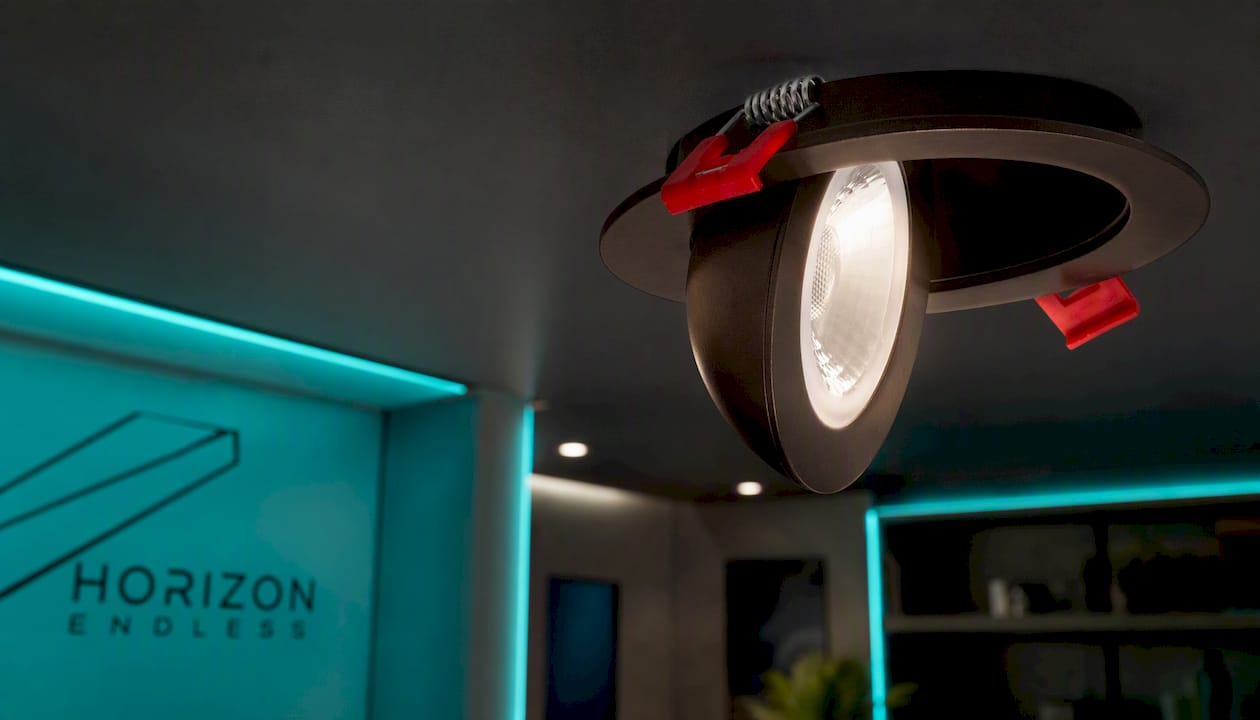
Whether you’re after a lighting upgrade like the DGF4(v3) Canless Downlight or you just want to browse what’s available across home, garden, automotive, and electronics categories, start there. If you’re not sure whether a listing’s warranty status or condition grade fits what you need, reach out to support before you check out. It’s the fastest way to buy with confidence instead of guessing.
Sources
- Warranties | Consumer Information | FTC
- FTC staff opinion to Sony Electronics — resale of returned consumer electronics
FAQ
Can Open-Box Items Be Returned?
Yes, most open-box items can be returned, but the window is often shorter than the one for new products from the same retailer. Always confirm the specific return deadline and condition requirements listed on the product page before you buy.
How Do You Return an Open-Box Item That Was Shipped?
Log into your order account, request a return label, and repack the item with all original accessories and documentation included. Drop it off at the shipping carrier listed on your label, and keep your confirmation email until the refund or exchange posts.
Does Amazon Allow Open-Box Returns?
Amazon’s Warehouse and Renewed programs handle open-box and refurbished inventory differently, and return terms vary by listing. Amazon’s Renewed Guarantee typically covers replacement or refund within a 90-day period for qualifying items, so check the specific program tied to your purchase.
Will Target Accept Open-Box Returns?
Most major retailers, including big-box chains, accept open-box returns within a defined window, though it’s frequently shorter than the standard new-item policy. Check the receipt or order confirmation for the exact deadline, since it can vary by product category.
What Discount Should You Expect on Open-Box Items at Horizon Endless?
Open-box discounts across the industry commonly fall between 10% and 30% depending on condition and retailer. Horizon Endless inspects every open-box listing before it’s posted, so you can check the exact price and condition grade on the product page itself.


